Mr. Yuba Raj D C

1.1 Introduction
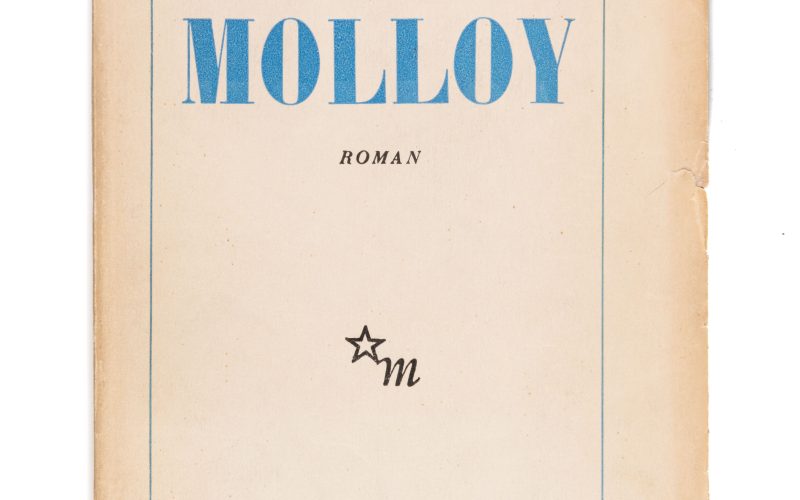
Molloy is a novel by Samuel Beckett, first published in French in 1951 as Molloy. It was later translated into English by Beckett himself. The novel is the first part of Beckett’s famous trilogy, followed by Malone Dies (1951) and The Unnamable (1953). It is considered one of the most important works of modernist literature and also marks the beginning of Beckett’s move toward postmodern experimental fiction. Instead of telling a straightforward story, the novel explores themes such as identity, memory, loneliness, and the search for meaning.
2.1 Structure and Narrative
The novel is divided into two parts. The first part is narrated by Molloy, an old wanderer who believes he is searching for his mother. Throughout his journey, he experiences confusion, physical weakness, and strange encounters. His memories are unreliable, and he often contradicts himself. The second part is narrated by Jacques Moran, a disciplined detective who is ordered to find Molloy. At first, Moran appears organized, logical, and confident. However, as his journey continues, he slowly loses control of his body and mind. By the end of the novel, Moran resembles the very man he was trying to find. This parallel structure suggests that Molloy and Moran may represent different aspects of the same human condition rather than two completely separate individuals.
3. Various Perspectives
3.1 Identity
One of the central themes of Molloy is the instability of identity. Molloy struggles to remember who he is and why he is travelling. Similarly, Moran gradually loses his confidence and sense of self during his search. Beckett suggests that identity is not fixed but constantly changing.
3.2 Existentialism and the Human Condition
The novel reflects existential ideas by showing life as uncertain and without clear purpose. Beckett does not provide answers to life’s big questions. Instead, he presents characters who continue living despite confusion, loneliness, and suffering. Unlike philosophers such as Jean-Paul Sartre and Albert Camus, Beckett does not offer a philosophical solution; he simply portrays uncertainty as a part of human existence.
3.3 Language and Communication
Beckett shows that language is often unable to express reality completely. Both narrators frequently contradict themselves, change their stories, and admit that they cannot explain their thoughts clearly. Through this, Beckett demonstrates the limitations of language.
3.4 Time and Memory
Time in Molloy is not presented in a linear way. Past and present are mixed together, and memories are often incomplete or inaccurate. This fragmented treatment of time reflects the confusion of the characters’ minds.
3.5 Physical Decline
Both Molloy and Moran experience physical deterioration. Molloy struggles to walk and depends on his bicycle, while Moran gradually becomes weak and disabled during his journey. Beckett uses the failing body as a symbol of human mortality and the limits of human control.
3.6 Humour and Absurdity
Although the novel deals with serious topics such as suffering and death, it also contains dark humour. One famous example is Molloy’s detailed method of arranging and sucking sixteen stones in his pockets. This humorous episode shows the human desire to create order in a meaningless world.
4.1 Modernism and Postmodernism
Molloy combines features of both modernism and postmodernism. Like modernist writers, Beckett explores the inner thoughts of his characters and presents a fragmented view of reality. At the same time, the novel questions whether truth, identity, and language can ever be fully understood, making it an important precursor to postmodern literature.
Critical Reception
Literary critics have interpreted Molloy from several perspectives.
- Existential critics see the novel as an exploration of alienation and humanity’s search for meaning.
- Psychoanalytic critics interpret Molloy’s search for his mother as a symbol of unconscious desires and identity formation.
- Poststructuralist critics argue that the novel demonstrates how language and meaning are unstable.
- Religious critics identify elements of spiritual searching, although Beckett avoids offering religious hope or redemption.
Because the novel does not provide definite answers, it continues to generate a wide range of interpretations.
Conclusion:
Molloy is not a traditional novel with a clear plot and ending. Instead, it focuses on the uncertainty of identity, memory, language, and existence. Through the journeys of Molloy and Moran, Beckett challenges readers to question what it means to be human. Its innovative style and philosophical depth have made it one of the most influential novels of the twentieth century and an important bridge to Beckett’s later works, Malone Dies and The Unnamable.
References:
Beckett, Samuel. Molloy. Translated by Samuel Beckett and Patrick Bowles, Grove Press, 1955.
Connor, Steven. Samuel Beckett: Repetition, Theory and Text. Basil Blackwell, 1988.
Cohn, Ruby. Samuel Beckett: The Comic Gamut. Rutgers University Press, 1962.
Esslin, Martin. The Theatre of the Absurd. Vintage Books, 2004.
Knowlson, James. Damned to Fame: The Life of Samuel Beckett. Simon & Schuster, 1996.