Mr. Yuba Raj D C

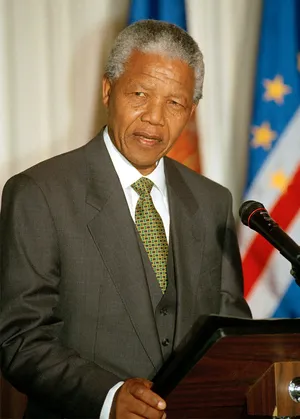
Nelson Mandela was one of the most influential leaders of the twentieth century and a global symbol of freedom, justice, equality, and human rights. He dedicated his life to ending racial discrimination in South Africa and promoting peace, reconciliation, and democracy. His extraordinary journey—from a young village boy to a political prisoner, and finally to the first Black president of South Africa—inspired millions of people around the world. Mandela’s life demonstrated the power of courage, perseverance, forgiveness, and leadership in overcoming injustice.
Born on July 18, 1918, in the small village of Mvezo in the Eastern Cape of South Africa, Mandela was originally named Rolihlahla Mandela, a Xhosa name that means “pulling the branch of a tree” or more commonly interpreted as “troublemaker.” He belonged to the Thembu royal family, and his father served as a local chief and counselor to the king. At the age of seven, one of his teachers gave him the English name Nelson, following the common practice during the colonial period. Mandela spent his childhood in the village of Qunu, where he learned about African traditions, culture, and leadership from village elders.
Mandela valued education from an early age. He attended local schools before enrolling at the University College of Fort Hare, one of the few institutions of higher education available to Black Africans at the time. While studying there, he became involved in student politics and protested against unfair policies, which resulted in his expulsion. Later, he moved to Johannesburg, where he worked as a law clerk while completing his studies through correspondence at the University of South Africa. He eventually earned a law degree from the University of the Witwatersrand, where he met people from different racial backgrounds and became increasingly involved in the struggle against racial injustice.
In Johannesburg, Mandela joined the African National Congress (ANC) in 1944. Together with other young activists such as Oliver Tambo and Walter Sisulu, he helped establish the ANC Youth League. The organization aimed to fight against the oppressive system of apartheid, a government policy that legally separated people based on race and denied Black South Africans their fundamental rights. Mandela believed that peaceful protests, strikes, and civil disobedience could bring about political change. He became a prominent leader in campaigns against discriminatory laws and worked tirelessly to organize resistance.
As the South African government became more repressive, Mandela concluded that peaceful methods alone were no longer effective. In 1961, he helped establish Umkhonto we Sizwe (“Spear of the Nation”), the armed wing of the ANC, which carried out acts of sabotage against government property while attempting to avoid loss of human life. In 1962, Mandela was arrested and later charged with sabotage and conspiracy to overthrow the government during the famous Rivonia Trial. During the trial, he delivered his historic speech in which he declared that he had fought against both white domination and Black domination and was prepared to die for the ideal of a democratic and free society.
In 1964, Mandela was sentenced to life imprisonment. He spent the next 27 years in prison, most of them on Robben Island, where conditions were harsh. Prisoners performed hard labor, received limited food, and were denied many basic rights. Despite these hardships, Mandela remained determined and continued to inspire fellow prisoners. He used his time in prison to study, reflect, and strengthen his commitment to justice and equality. His dignity, discipline, and resilience earned him respect even among some prison guards. During these years, international support for Mandela grew, and worldwide campaigns called for his release.
On February 11, 1990, after increasing international pressure and political reforms within South Africa, Mandela was finally released from prison. His release marked a turning point in the country’s history. Instead of seeking revenge, Mandela encouraged forgiveness, dialogue, and peaceful negotiation. He worked closely with South African President F. W. de Klerk to end apartheid and establish a democratic political system. Their efforts prevented widespread violence and paved the way for the country’s first multiracial elections.
In 1994, South Africa held its first democratic election in which citizens of all races could vote. Nelson Mandela was elected as the first Black President of South Africa, serving from 1994 to 1999. As president, he focused on rebuilding the nation, reducing racial divisions, improving education and healthcare, and promoting national unity. One of his greatest achievements was the creation of the Truth and Reconciliation Commission, led by Archbishop Desmond Tutu. The commission aimed to uncover the truth about human rights abuses committed during apartheid while encouraging forgiveness rather than revenge.
Mandela also became an internationally respected statesman. He worked to promote peace, resolve conflicts, fight poverty, and raise awareness about HIV/AIDS, particularly after the death of his son from an AIDS-related illness. He supported children’s rights, education, and social justice through the Nelson Mandela Foundation, which continues his humanitarian work today.
Throughout his life, Mandela received numerous awards and honors. In 1993, he and F. W. de Klerk were jointly awarded the Nobel Peace Prize for their efforts to peacefully end apartheid and establish democracy in South Africa. He also received honorary degrees and awards from countries around the world in recognition of his contribution to freedom, peace, and human rights.
Nelson Mandela retired from public life in the early 2000s but remained an influential moral leader. He passed away on December 5, 2013, at the age of 95. His death was mourned by people across the globe, and world leaders paid tribute to his remarkable life and legacy.
Nelson Mandela’s life remains a powerful example of courage, determination, humility, and forgiveness. He showed that even after decades of suffering and imprisonment, it is possible to choose peace over hatred and reconciliation over revenge. His leadership transformed South Africa from a divided nation into a democracy and inspired movements for justice and equality across the world. Today, Mandela is remembered not only as a great political leader but also as one of history’s greatest champions of human dignity and human rights. His famous words, “Education is the most powerful weapon which you can use to change the world,” continue to inspire generations to believe in the transformative power of knowledge, compassion, and perseverance.